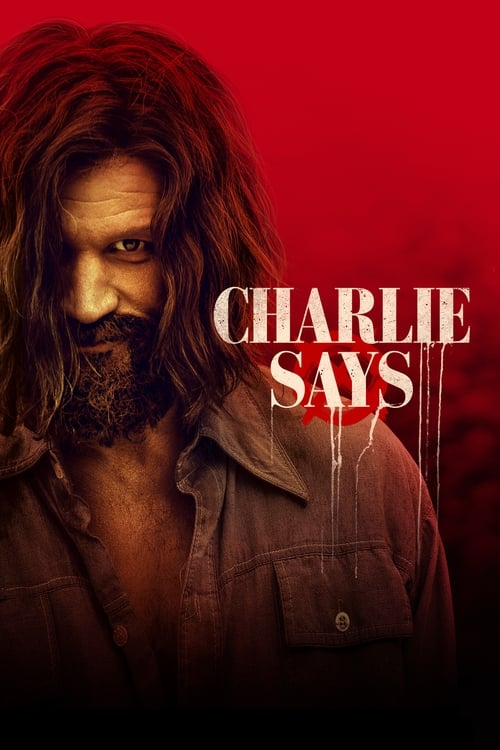
Charlie Says
Drama, Crime
Storyline
Three young women were sentenced to death in the infamous Manson murder case, but when the death penalty was lifted, their sentence became life imprisonment. One young graduate student was sent in to teach them – and through her we witness their transformations as they face the reality of their horrific crimes.
"Dreamers. Victims. Murderers."






Community Reviews
No community reviews yet.
Reviews from the Web
"Charlie Says “follow my ruthless indoctrination with limited psychological depth”. Charlie also says “forget about ‘Doctor Who’, I can be a credible talent by portraying a notorious serial killer with a bushy beard and questionable accent”. What Charlie forgot to say though was “it’s still an ill-mannered interpretation of events that rarely conveys humanisation within its real-life human characters”. For a year that had approximately three feature-length titles depicting the murder of Sharon Tate, Harron’s meticulous angle is the most welcomed approach. Purely focusing on the “family” and how Manson brainwashed them into believing his own radical fantasy, the story hones in on a psychologist assisting three female followers in realising the reality of their heinous actions. Consequently, the narrative written by Turner is constructed through the tired structure of flashbacks, whilst holding an ounce of gravitas. And I can visibly touch the intangible perspective that Turner aimed for. Almost tasting its ingenuity. Proposing a psychological position of events that have been retold repeatedly within cinema, by targeting the process of curing indoctrination. Yes, Sharon Tate and other rich folk get slashed, stabbed and butchered. However, instead of showcasing those murders for the sake of fulfilling the sadism of viewers, it holds intentions. Crucial events in the escalation of Manson’s brainwashing capabilities, puppeteering his female marionettes. Producing credible grounds for psychological analysis. The fundamental issue though, is that the analysis and exploration of this psychosis is incredibly shallow. A noticeable absence of gradual cognitive dynamics between protagonist Leslie (aptly named Lulu by Manson) and her new leader. Manson’s omnipotent stance is addressed immediately with no real progressive foundations. An impressionable Leslie is recruited and just happens to follow Manson’s orders without hesitation. That inner moral conflict between everything she once knew and all that she relinquished was missing. Occasionally, her abrupt pauses and glistening eyes, which were portrayed eloquently by Murray, illustrated indications of self-questioning. Yet somehow felt forced, juxtaposing her initial stance when recruited. Fortunately their incarceration at the institution meant that their ideals and beliefs could be interrogated, likening Manson’s infectious faith to an extreme Christian denomination. Although not as much of the runtime was expended on this acute angle that would’ve made for a more engaging psychological drama. A shame really as it wastes the talent of Wever. Smith offered a credible portrayal of the eponymous murderer, yet personally was unable to break away from his usual quirks cemented in his stint on ‘Doctor Who’. The whole talking to inanimate objects and nonsensical splurges about nothing. It must be infuriatingly difficult for him, but he did a decent job by showcasing his versatility. Even if his Northamptonshire accent popped in to say “alright mate?” from time to time. Overall, a frustrating biographical film, I must say. The approach to the “family” was, dare I say, near-perfect. However the absence of emotional, psychological and structural depth resulted in a middling drama that simply retold events, rather than powering them. Charlie said “jump!” but Harron and Turner were unable to reach his intended height. Missed opportunity to title this “Charlie’s Angels” though..."
Read full review →Recommended

Extremely Wicked, Shockingly Evil and Vile
View Movie →
Dark Places
View Movie →
The Safety of Objects
View Movie →
Black Mass
View Movie →