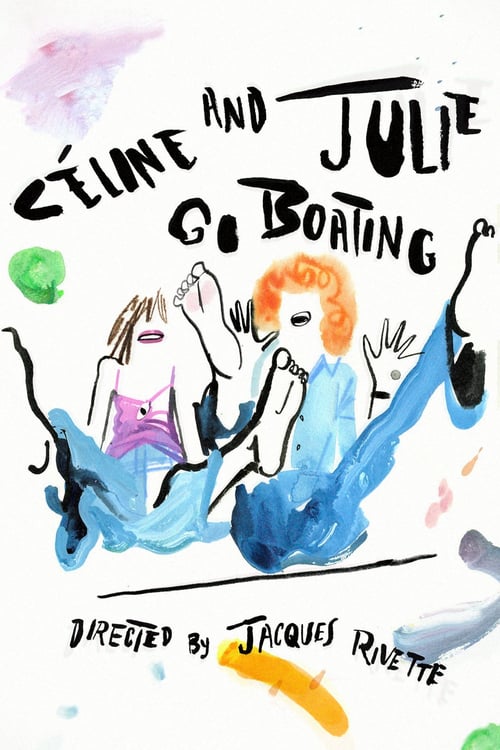
Céline and Julie Go Boating
Comedy, Drama, Fantasy
Storyline
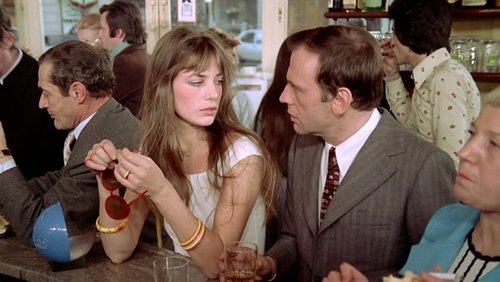
Julie, a daydreaming librarian, meets Céline, an enigmatic magician, and together they become the heroines of a time-warping adventure involving a haunted house, psychotropic candy, and a murder-mystery melodrama.





Community Reviews
No community reviews yet.
Reviews from the Web
"**The Orphan Love Child of Harry Houdini and Timothy Leary** _Céline and Julie Go Boating_ is two children who’ve stolen the keys to the dream factory, turning the machinery on and pressing all the button at once just to see what happens. This film is pure magic. But it's not the kind that arrives with fanfare and spotlights. Rivette has crafted a quiet, subversive magic of women who’ve decided the rules don’t apply to them. Rivette’s film isn’t so much watched as it is inhabited. At three hours, it's not long - it's damned intoxicating. This is a place where a house becomes a haunted television set broadcasting the same melodrama on loop until someone dares to change the channel. Contrary to popular belief, Céline and Julie isn’t French New Wave. This is something wilder, more unruly. It's a cousin to the New Bohemian Front, that loose confederation of artists who, after the Vietnam War, treated life and art as the same chaotic experiment. Here, you can feel the kinship with Ginsberg’s The Fall of America, where poetry becomes a live wire of revelation, or Springsteen’s Nebraska, where stories are stripped to their bones and left to bleed. And like Kenneth Anger’s Scorpio Rising or Patti Smith’s Horses, it’s a work that refuses to behave, that understands art as a kind of sacred mischief. Rivette’s Paris isn’t a set, but a playground, and Céline and Julie aren’t characters so much as they are sisters, rewriting their world with the giddy audacity of kids who’ve realized no one’s watching. What makes it fascinating, technical flaws and all, is the alchemy between Berto and Labourier. They move through the film like a pair of tricksters, their energy infectious, their connection immediate and unforced. There’s a scene where they swap identities, trying on each other’s lives like dresses in a thrift store, and it’s so effortless you believe they’ve been doing this forever. They’re not acting, they’re playing; and the film becomes a testament to the power of that playfulness. This is pure Rivette style - cinema as an eyeball on improvisation. Unlike most films, the feminist theme isn’t didactic, it’s organic. It's a natural extension of the leads' dynamic. Just like Gertrude Stein and Alice B. Toklas, two forerunners of the New Bohemian Front, they’re a duo who’ve built their own world, one where men are irrelevant, and magic is real. I love the film’s surrealism because it isn’t the cold, cerebral kind. It’s warm, tactile, the kind that makes you believe, just for a moment, that if you concentrate hard enough, you could step through a mirror into Wonderland. The house where the melodrama unfolds is a perfect metaphor for the stories we inherit and the personal power we have to rewrite them. Céline and Julie don’t just watch - they intervene, they laugh, they turn tragedy into farce. It’s a reminder that the best kind of art doesn’t just reflect life; it creates possibilities. In the end, Céline and Julie Go Boating isn’t about escape. It’s about possession, it's about taking the reins of your own story no matter how strange or messy it gets. It’s a film that doesn’t just break the rules; it makes you realize the rules don't exist."
Read full review →Recommended

The Science of Sleep
View Movie →
The Tenant
View Movie →
On a Magical Night
View Movie →
The Mad Women's Ball
View Movie →